The Monetization Model Most OnlyFans Creators Get Wrong
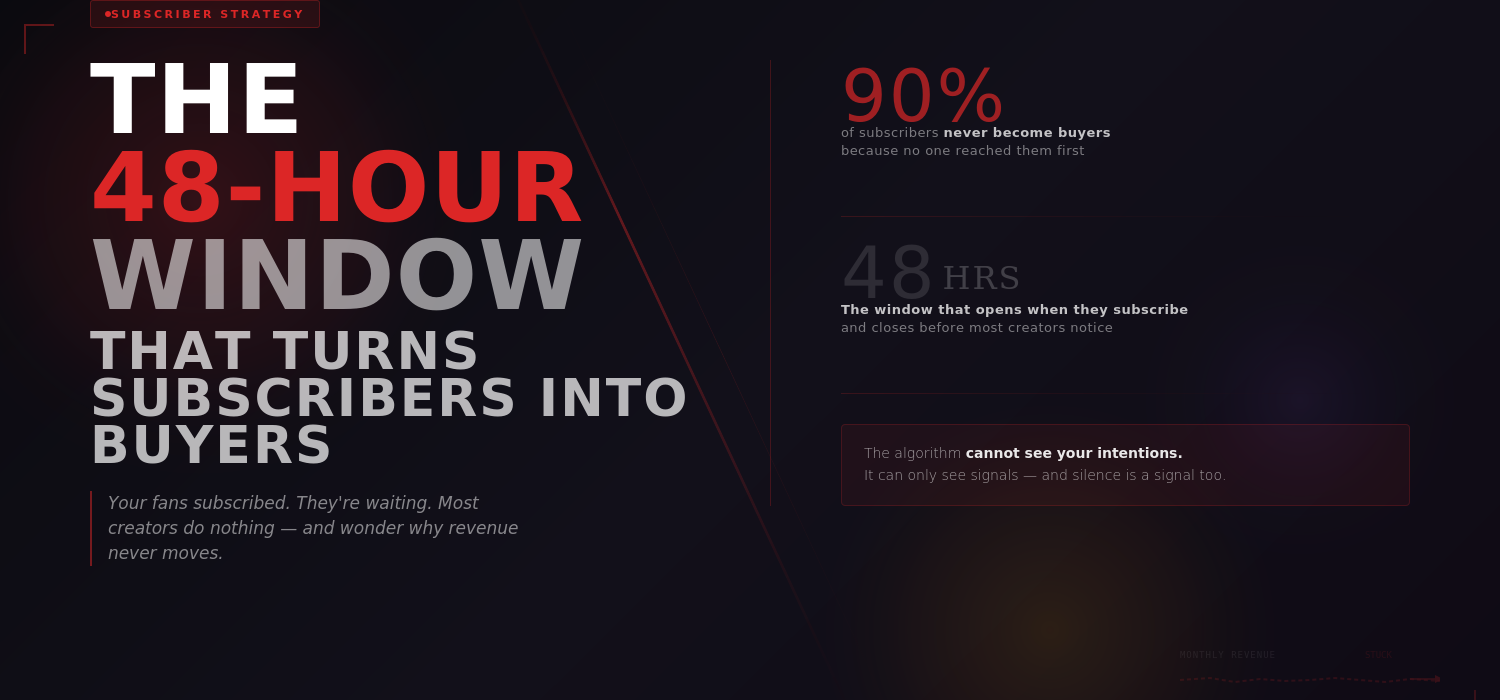
When revenue stalls on OnlyFans, creators usually respond with intensity. They post more often. They promote harder. They run discounts. Some lower their subscription price. Others flood their page with additional content, hoping increased volume will unlock growth. In most cases, none of these actions fix the plateau.
The reason is simple: the ceiling is structural.
After reviewing enough accounts that have been stuck at the same revenue level for months — sometimes years — a consistent pattern emerges. The creator is not lazy. The content is not necessarily weak. Traffic may even be decent. The problem sits underneath all of that. The monetization model was never intentionally designed beyond the early growth phase.
What works to get a page to $1,000 or $3,000 per month is often exactly what prevents it from reaching $10,000 or $20,000.
The issue is not effort. It is architecture.
Subscription Dependency Is the First Structural Cap
The most common flaw in stalled accounts is overreliance on subscription revenue.
At the beginning, subscriptions feel like validation. Subscriber count grows. Monthly revenue climbs. The creator feels momentum. However, subscriptions on OnlyFans are volatile by nature. Churn is normal. Many subscribers join impulsively and cancel within a billing cycle or two.
When subscription revenue makes up the majority of total income, the business becomes fragile. Every month turns into a replacement exercise. New subscribers must constantly offset cancellations. The creator lives in a cycle of acquisition instead of expansion.
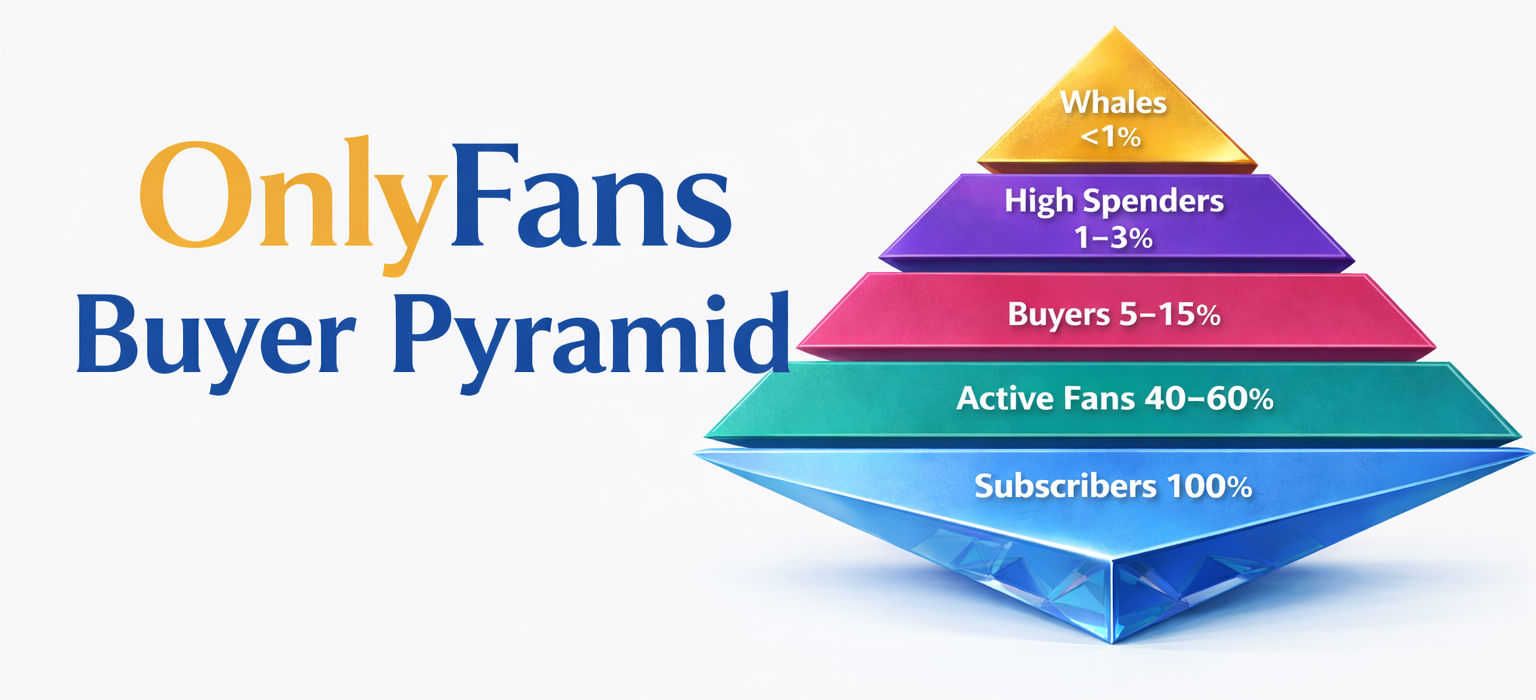
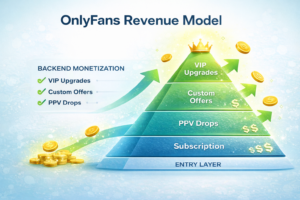
In contrast, higher-earning accounts treat subscriptions as qualification. A subscription is not the product; it is access to the ecosystem behind the page. The real revenue comes from structured backend monetization — layered PPV releases, tiered custom offers, controlled exclusivity, and differentiated buyer tiers.
If most of your income resets every billing cycle, your model is capped. Scaling traffic will not fix that weakness. It will only make the cycle faster.
The Underpricing of Attention
Many creators misunderstand what they are actually selling. They think they are selling photos or videos. In reality, they are selling access to attention.
Underpricing on OnlyFans rarely shows up as “too low subscription price.” It shows up as overexposure. When every subscriber receives the same pace of replies, the same level of interaction, and the same type of content access immediately, there is no progression. Without progression, spending plateaus.
Attention must unfold in layers. There needs to be a difference between general access and premium access. There needs to be movement from curiosity to personalization to exclusivity. When everything feels equally available, buyers settle into passive consumption.
This is where many accounts quietly leak revenue. Conversations are friendly but not strategic. Exclusivity is mentioned but not structured. Offers are made, but without timing discipline. The creator is active, but not intentional.
High earners understand pacing. They know when to respond, when to escalate, and when to introduce scarcity. They do not flood buyers with offers, nor do they wait indefinitely. They manage attention deliberately.
The difference is subtle, but financially significant.
No Escalation Logic in Chat
In almost every plateaued account, chat activity is high. There are conversations happening daily. Engagement looks healthy from the outside. Yet backend revenue remains inconsistent.
The missing element is escalation logic.
In weaker models, offers appear randomly. Sometimes they are introduced too early, before interest is built. Other times they are delayed so long that the buyer never transitions from casual engagement to paid interaction. Pricing can also fluctuate depending on mood, which introduces instability.
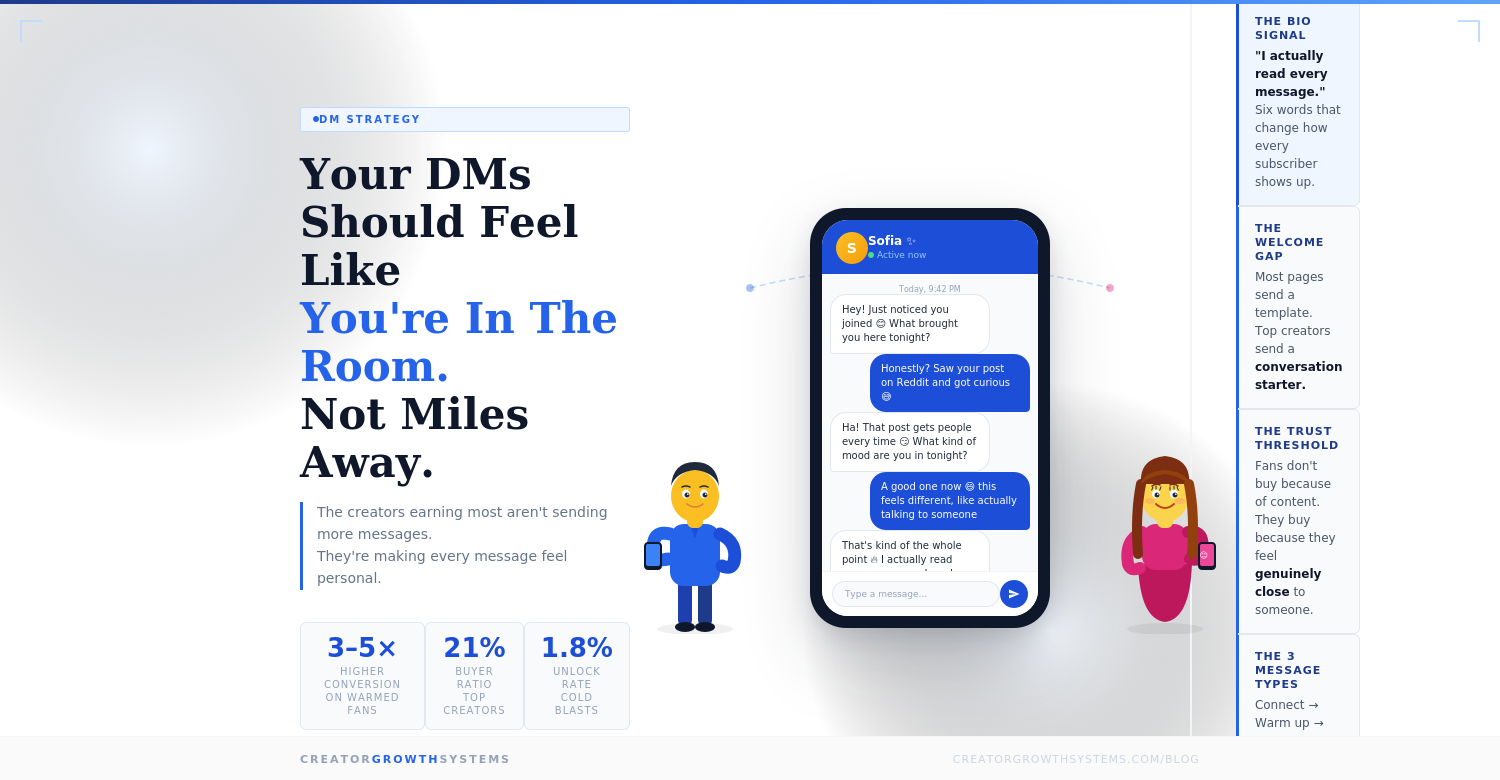
In structured accounts, chat follows predictable behavioral stages. Engagement builds familiarity. Personalization increases perceived value. Exclusivity is framed carefully. The offer is positioned at a moment when resistance is low.
This is not manipulation. It is sequencing.
When escalation becomes consistent, revenue per subscriber rises without increasing workload. The creator is not working harder; they are moving conversations forward more effectively.
Without escalation logic, income depends too heavily on personality and luck. With structure, it becomes repeatable.
Random Monetization Creates Buyer Fatigue
Another structural issue in stalled accounts is inconsistency in monetization rhythm.
PPVs are dropped without pattern. Custom offers are introduced reactively. Discounts appear whenever revenue dips. This unpredictability weakens perceived value. Buyers become cautious when pricing and offer timing feel unstable.
Revenue grows more smoothly when monetization follows a rhythm. Structured cycles create anticipation. Stable pricing builds trust. Scarcity, when used, feels intentional rather than desperate.
This does not mean turning the page into a rigid sales machine. It means eliminating emotional decision-making from pricing and offer timing.
Buyers respond better to clarity than chaos.
Ignoring Revenue Density
Subscriber count is one of the most misleading metrics on the platform. Many creators celebrate reaching 1,000 or 2,000 subscribers, only to discover their income remains inconsistent.
Revenue density — how much each subscriber spends over time — is far more important than raw volume. An account with 800 engaged, monetized subscribers is structurally stronger than one with 2,500 passive ones.
When revenue density is low, scaling traffic simply increases operational load. More messages, more churn, more management — without proportional income growth.
When revenue density is high, scaling becomes efficient. Each new subscriber adds meaningful value instead of marginal value.
This is the difference between chasing growth and managing growth.
Why Most Creators Stay Stuck
The monetization model that drives early momentum feels comfortable. It is familiar. It revolves around posting consistently and growing subscriber count. Changing that model requires stepping back and questioning assumptions.
Many creators avoid this because the current system is producing “something.” It may not be growing, but it is functioning. Structural redesign feels risky.
However, revenue plateaus are rarely broken by intensity. They are broken by redesign.
When subscription dependency is reduced, attention is layered, chat escalation becomes intentional, monetization rhythm stabilizes, and revenue density increases, the ceiling lifts.
Until then, growth efforts feel like pushing against a wall.
Conclusion
Most OnlyFans revenue ceilings are self-built. They are not caused by algorithms or market saturation. They are caused by monetization models that were never engineered beyond the beginner stage.
If your income has not moved for months, the question is not how to get more subscribers. The question is whether your structure allows each subscriber to become more valuable over time.
Scaling is not about doing more of the same. It is about correcting the model that created the plateau in the first place.
When the model changes, revenue follows.