After working closely with multiple creators and managing multiple accounts, restructuring pages, and helping some move beyond frustrating income plateaus, I’ve seen a pattern repeat itself across niches and audience sizes. Many creators remain stuck between $500 and $5,000 per month. They are active, consistent, and serious about building something sustainable. They joined OnlyFans with the goal of financial independence, yet months later their income fluctuates instead of growing.
The issue is rarely effort. In most cases, the structure behind the page hasn’t been designed consciously. OnlyFans operates as a subscription business, whether you treat it that way or not. Revenue flows through stages. When one stage is underdeveloped, income slows even if content output increases.
Most creators in this plateau range share one similarity: the majority of their income comes from a single source, usually new subscribers. That structure creates visible spikes, but it also creates instability because each month depends heavily on replacing those who leave.
Before breaking down the model further, it’s important to understand what balanced revenue typically looks like.
The OnlyFans Business Blueprint
Like any online product, OnlyFans follows a predictable funnel. Based on practical account management, the flow consistently looks like this:
Attention → Positioning → Conversion → Experience + Monetization → Retention → Referral
Each stage supports the next. When one weakens, the impact shows up later in revenue.
- Attention brings people into your ecosystem.
- Positioning clarifies what you offer and who it is for.
- Conversion turns that interest into subscription.
- Experience and monetization determine how much each subscriber is worth.
- Retention stabilizes income.
- Referral reduces acquisition pressure.
Most struggling pages invest heavily in attention and content production but spend very little time strengthening positioning, experience, monetization and retention. That imbalance is where plateaus form.
Onlyfans Income Sources: If It’s Not Distributed, It’s Risky
A stable OnlyFans business does not depend on one stream of income. Yet many creators unknowingly build exactly that, a model heavily dependent on new subscribers.
Revenue typically comes from three core sources:
- New Subscribers
- PPV / Paid DMs
- Renewals
When more than 60% of income relies on new subscribers, the business must constantly replace cancellations just to maintain the same level. Backend monetization and renewals are what reduce that pressure.
To provide a realistic reference point:
Beginner ($0–$2K/month):
60–80% subscriptions, 10–25% PPV, minimal renewals.
Mid-Level ($3K–$8K/month):
30–50% subscriptions, 30–50% PPV, 15–25% renewals.
Structured / Higher-Level:
20–40% subscriptions, 40–60% backend monetization, 20–30% renewals.
The shift between these levels is not primarily about content volume. It is about distribution and design. When income is diversified across acquisition, monetization, and retention, growth becomes more predictable.
With that foundation clear, we can now examine each stage of the funnel in detail and identify where income typically stalls.
Stage 1: Attention – Creating Demand Before the Paywall
OnlyFans does not generate attention for you. It converts attention you bring.
Many creators open their page first and then try to figure out traffic. That approach usually leads to inconsistent growth. Think about how major brands operate. A Netflix series builds anticipation before release. Apple teases features long before launch day. Attention is created before the product is sold.
Your page is the product. Social media and platforms like Reddit are your marketing engine.
Reddit, when used correctly, connects you with niche-driven communities where intent already exists. Posting in aligned subreddits can generate higher-quality traffic because users are browsing within specific interests.
Instagram, TikTok, and X work differently. They build familiarity over time. Teasers, short previews, personality-driven posts, and subtle announcements create anticipation before someone clicks your link.
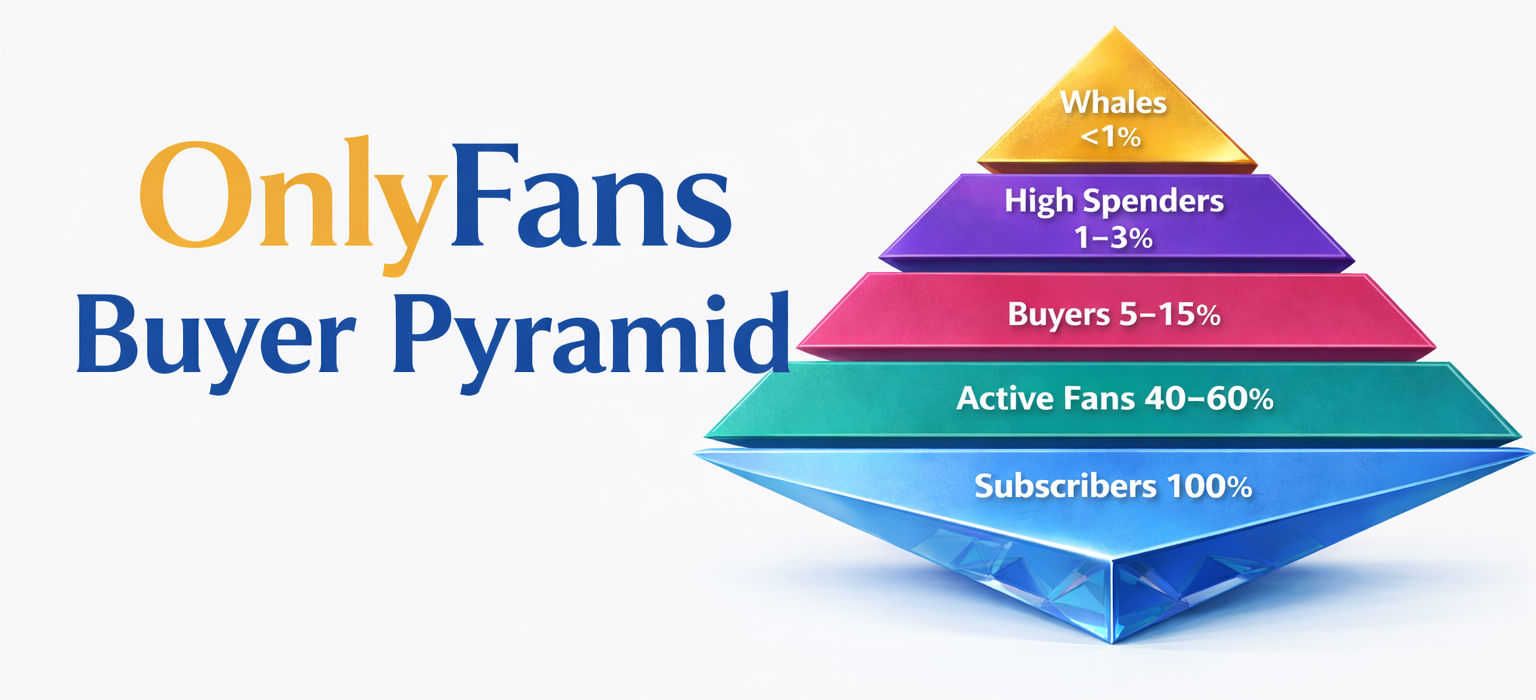
A weak attention strategy looks like random posting and constant link drops. Its very important to understand OnlyFans Buyer Pyramid : Why Most Subscribers Never Buy
A structured attention strategy looks like this:
1. Build Recognition Before Traffic
Social media gives you recognition first, then attention. When people repeatedly see your name, face, or style, you move from “random content” to someone identifiable. Recognition lowers hesitation and makes later clicks easier.
2. Keep Your Name Consistent Everywhere
Your social handle should closely match your OnlyFans username. If someone searches for you after seeing a preview, they should find you instantly. Inconsistent names create friction, and friction reduces conversion.
3. Create Anticipation, Don’t Just Post
Announce themed drops or special content before releasing them. When followers expect something, engagement increases and traffic becomes intentional.
4. Share Teasers That Spark Curiosity
Controlled previews work better than full reveals. Give enough to intrigue, not enough to satisfy.
5. Drop the Link After Interest Exists
Link drops convert better when curiosity is already built. Without interest, it feels like a sales push.
Attention built through identity and anticipation converts more consistently than attention built through volume alone.
Stage 2: Positioning – Turning Visitors into Buyers
Once someone clicks your link, your profile becomes your product page.
Most bios are vague.
“Exclusive content 🔥 Daily posts 😘 Fun DMs 💕”
That could describe almost any page.
Now compare it to something clearer:
“Weekly themed drops. Teasing slow-burn style. Interactive DMs. Limited custom slots each month.”
Or:
“Soft girlfriend-style experience. Three curated sets weekly + voice notes. Personal engagement guaranteed.”
Clarity reduces hesitation. Visitors need to visualize what they are subscribing to.
Pinned posts reinforce positioning. If you are building momentum, your pinned content should not be random. It should demonstrate:
Your niche clearly
Your tone
Your production level
Your interaction style
Pinned posts act as proof. When positioning aligns with attention, conversion improves naturally.
Stage 3: Conversion – Attracting Committed Subscribers
Conversion is influenced by what happens before the subscribe button is clicked.
Pricing too low may increase numbers but reduce long-term value. Very cheap subscriptions often attract impulse buyers who consume quickly and cancel.
Moderate pricing filters intent.
For example:
800 subscribers at $6 generate $4,800.
500 subscribers at $12 generate $6,000.
Lower subscriber count does not automatically mean lower revenue. Higher-intent subscribers are more likely to engage in PPV and renew.
Discounts should create urgency, not dependency. If your strategy revolves around constant promotions, subscribers learn to wait instead of commit.
Conversion is about attracting subscribers who will engage, not just subscribe.
Stage 4: Experience + Monetization — Where Growth Actually Happens
Subscription is only the beginning.
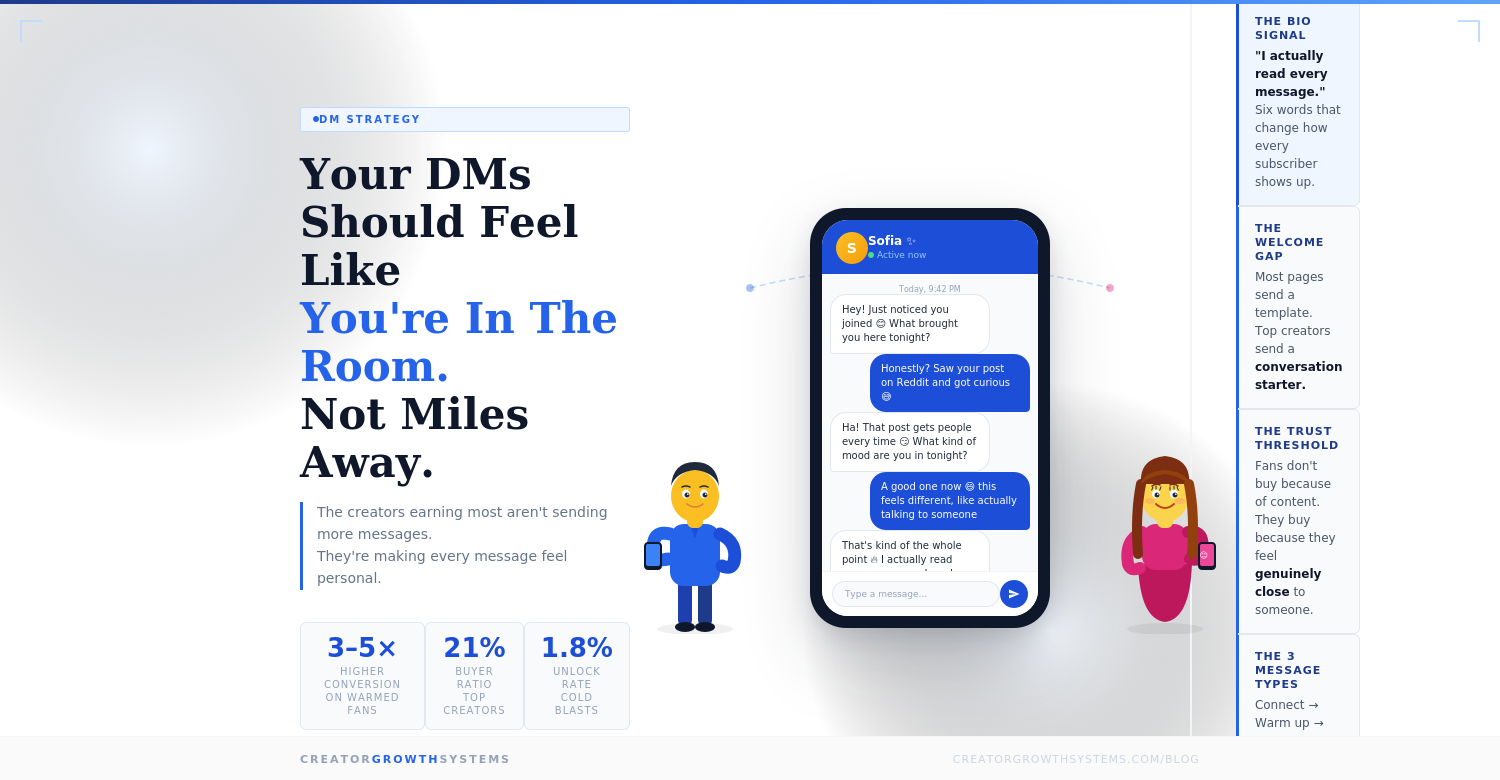
The first 24–72 hours after someone joins are critical. A new subscriber has peak curiosity. If nothing reinforces that, engagement drops quickly.
A structured experience includes:
A personalized message within 24 hours
Using their name naturally
Guiding them toward your strongest pinned content
Asking a light preference question
Example:
“Glad you joined. Most new subs start with the pinned teaser. Did you prefer the softer vibe or the teasing one?”
If they respond, you now understand preference. That insight allows you to align future PPV content accordingly.
Monetization should feel layered. Feed content justifies subscription. PPV must clearly exceed baseline value. Structured pricing tiers and predictable rhythm prevent randomness.
Example:
400 subscribers
15% buying $25 PPV = $1,500
30% buying $25 PPV = $3,000
No additional traffic required.
Revenue scales when penetration increases.
Tracking behavior matters. Identify who spends early, who engages consistently, and who remains passive. Your top 10–15% of spenders should not receive the same experience as everyone else.
Stage 5: Retention – Protecting What You’ve Built
Retention determines whether income compounds or resets each month.
If you have 500 subscribers and 45% renew, you must replace 275 people monthly. If renewal rises to 65%, only 175 need replacing. That difference significantly reduces acquisition pressure.
Renewal should be reinforced, not assumed.
Three to five days before rebill:
Increase engagement
Tease upcoming content
Reference previous interactions
Acknowledge loyalty
Behind-the-scenes content plays a strategic role here. BTS works because it creates narrative continuity. Instead of isolated drops, subscribers feel like they are following something unfolding. Humans are wired to follow stories. When there is anticipation about what comes next, cancellation becomes less likely.
Retention is strengthened when the page evolves rather than repeats identically each month.
Stage 6: Referral – The Growth That Doesn’t Cost You Anything
Referral is the stage almost nobody talks about, which is exactly why it matters.
When a subscriber genuinely enjoys their experience — when the content matches what was promised, the interaction feels personal, and the PPV feels worth the money — they talk. Not publicly. OnlyFans isn’t something most people announce to the world. But they send a preview in a private chat. They mention a creator to a friend who shares the same niche. They drop a teaser in a forum without being prompted.
That is organic referral.
It doesn’t happen because you asked for it. It happens because the earlier stages of your funnel worked. When attention was aligned, positioning was clear, experience felt personal, and retention created attachment, referral becomes a byproduct.
You cannot force it — but you can design for it.
Creating short, high-quality preview clips specifically meant for sharing often works. Not your best content. Not something that removes exclusivity. But a well-edited tease that sparks curiosity. Subscribers share it because it reflects well on them. People share things that make them look like they found something valuable.
Long-term subscribers can also be engaged directly. A message acknowledging loyalty and casually asking if they know someone who might enjoy the page often performs better than expected. At that stage, it feels personal rather than promotional.
Referral will not replace your acquisition strategy. But when it works, you will notice something subtle: your strongest subscribers often arrived through someone already invested. They convert faster, spend more comfortably, and churn less because trust was transferred before they subscribed.
Referral is quiet compounding.
Closing Summary
This breakdown is based on direct observation and analysis of multiple creator accounts across different income levels. The difference between plateau and growth is rarely content quantity. It is structure.
When you treat OnlyFans as a posting platform, income fluctuates. When you treat it as a subscription business with a defined funnel, growth becomes measurable.
Attention must be intentional.
Positioning must be clear.
Conversion must attract commitment.
Experience must feel personal.
Monetization must be structured.
Retention must be reinforced.
If you follow this model consistently and approach your page as a business rather than a content feed, growth becomes far more predictable.
If any assistance is required in identifying where your structure is weak, we are here to help.
The final question is simple:
Are you ready to treat this as a business model and put in the effort it requires?